Fairmeadow Robotics Newsletter #1
An update from our friendly neighborhood Fairmeadow Robotics Team.
By Manisha Verma· Nov 30, 2025
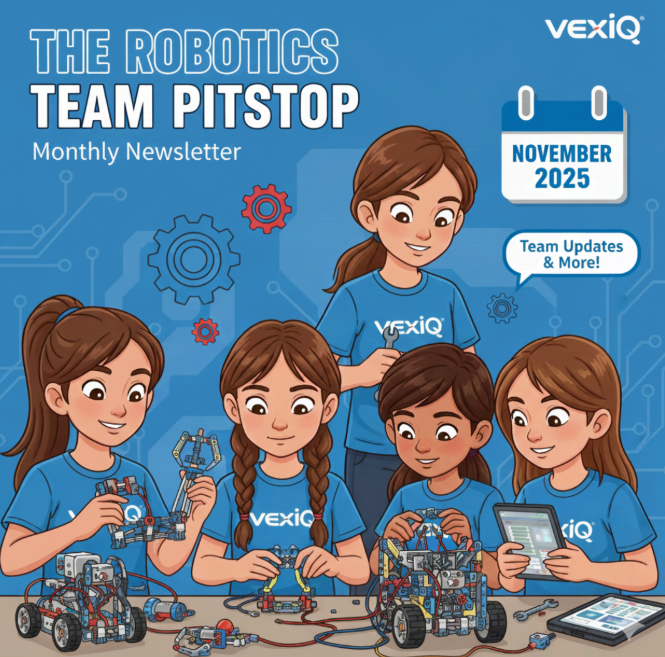
Why are we doing this?
The world as we know it is changing rapidly. Careers and professional journeys are being redrawn by the day. When things settle down post-AI, a “career” will look very different from what previous generations have gotten used to. The purpose of the Fairmeadow Robotics program is to help kids thrive in the post-AI world.
But why Robotics? Robotics training equips our children to become the innovative leaders the future needs. By learning to problem solve and build, they develop the critical thinking and nimble, entrepreneurial skills required to successfully navigate and solve complex, real-world challenges.
All of this may seem like too much to expect from 10-year olds, but it’s never too early to teach building projects of increasing scope by iterating through failures!
Roadmap for the Fairmeadow Robotics Team
This is a bright and hungry batch of kids who have already come a long way in their first 3 months of robotics and programming! Our original plan was to utilize this year towards skill building and prepare the kids to go competitive next year (2026-2027 academic year). We are seeing every sign that skill building is going well and the kinds will be ready / yearning to compete alongside other local and regional teams by next summer if not sooner. Ultimately it will be the children’s choice about if and when they decide to go competitive.
About the VEX Competition Track
VEX and First Lego League (FLL) and the most recognized robotics competitions for school going kids around the world. They both are very comparable and excellent choices, and choosing one over the other is mostly a preference of parts (legos vs robotics parts) and progression (unlike FLL, VEX progresses beyond middle school).
VEX Competitions evaluate children using a holistic framework where robotics is at the core but not everything. For example, the kids will need to give presentations on their ideas, answer Q&A from judges, present their “rough” work as captured in the engineering design notebooks, etc. This is why we love VEX! We believe that the robotics program has the potential to be so much more than robotics, and it’s exciting to see the kids grow in all these realms.
Preparation for Competitive Track
VEX IQ Competitive Track is played on a 6 by 8 foot board using a unique goal or challenge for that year. For example, check out the 2025-2026 challenge “mix and match” here .
Doing well on the competitive track broadly requires following types of skills:
- Robotic assembly and operating skills ( mechanical engineering)
- Programming skills. The competition includes a controller operated section and an autonomous section - the latter requiring more advanced programming skills.
- Being organized through detailed note taking, visual engineering design, etc.
- Presentations about your work, e.g. “how I built this”. What were the challenging parts? What ideas or designs did not work? How did we research the problem?
- Operating in a more ambiguous setting. One of the scoring sections of the competition requires 2 teams to be sharing the same board and cooperate to score points. Cooperating with a team that you’ll be meeting for the first time in a competition setting is hard! Therefore it’s helpful to make assumptions about how each team will operate in this ambiguous setting.
We have so far focused heavily on #1 and #2, and in December, we will expand to #3. Starting January, we will be recording interviews with each child about #4, providing feedback, and sharing with respective parents. #5 is more context specific and we will pick it up next fall when the 2026-2027 challenge is announced.
Roadmap
Between Dec’25 to Mar’26 we will focus every month on a unique problem relating to mechanical engineering problems in robotics. The problems are laid out in the detailed roadmap section below, but the objective is for children to become well versed and independent in building sub-systems of a usable robot.
In April’26 and May’26, we plan to acquire a prior year robotics challenge set and use that to give the team a flavor of what it takes to build a project that’s able to compete.
As a fun activity, starting in Jan’26, we will also organize a few “field trips” on weekends to take the kids to local VEX IQ robotics competitions at Gunn High to familiarize them with the competition environment and the energy in the room!
Our Workshop
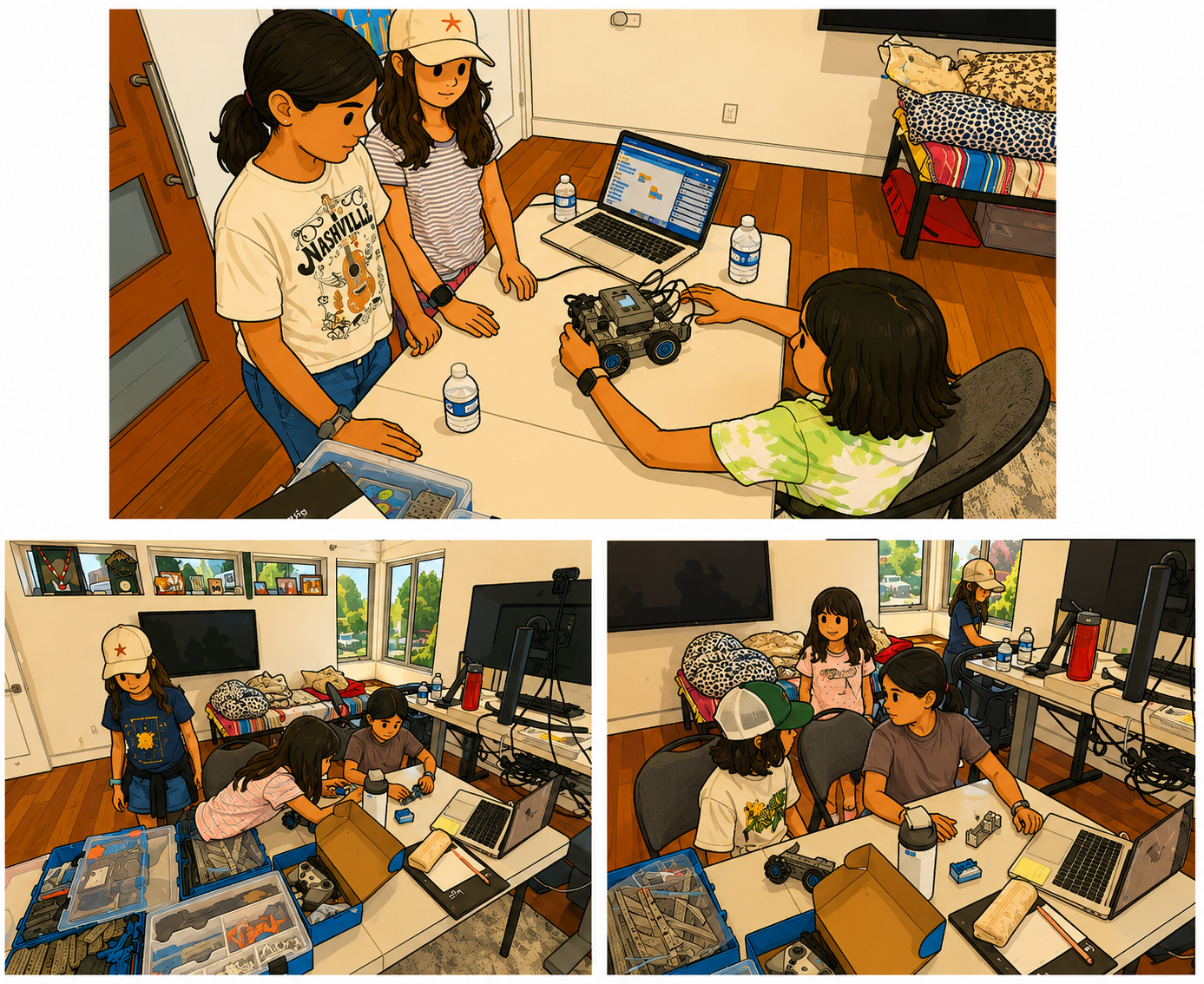
"The robots you are building today are more than just metal and motors. They are puzzles you solve, ideas you bring to life, and the first steps toward inventing a world that doesn't exist yet."
— Manisha’s Gemini-aided quote
Sep – Nov 2025
The first three months of the Robotics program focused on:
- Basic Mechanical Principles: By finishing each of the core robotics projects recommended by the VEXIQ program, the kids have familiarized themselves with basic mechanical principles.
- Programming: All kids are now able to independently drive Scratch programming tasks, discovering different sensors and devices through the VEX IQ editor, and download the program onto the brain.
- Core Robot Builds: All kids are familiar with the established beginner templates for robot builds. Most things that they build will be improvisations on these core designs.
- Sensors: The team has used all of the default sensors shipped with the kit for their autonomous driving builds, e.g. distance sensor, optical sensor, push button, etc.
- Teamwork: The kids are able to quickly organize in pairs, divide-and-conquer larger projects, and help each other in building larger components.
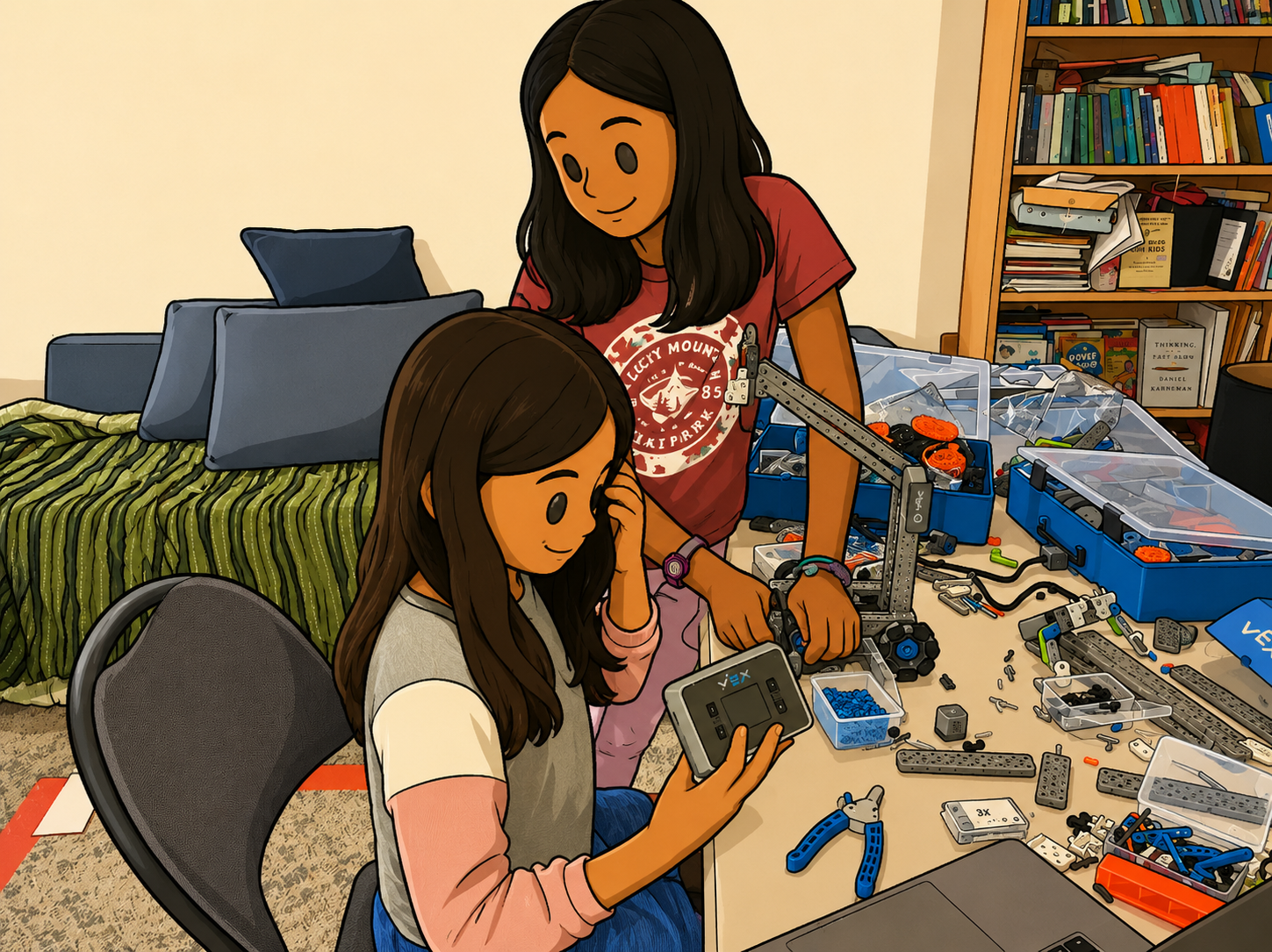
Curriculum from Dec 2025 to May 2026
Dec 2025: Mini-Arm / End-Effector
Now that the kids have familiarized themselves with each of the basic robotic architectures, we will spend December by taking on a novel problem without any set recipe. Specifically, the children will extend the Clawbot design with an additional degree of motion - lift a cube, rotate it upside down by 180 degrees, and lay it flat on the ground or stack it on top of an existing stack of cubes.
Introducing an additional degree of freedom will come with multiple challenges - placing a new motor, redesigning the claw to spin around its axis, and retaining the vertical motion of the claw (to enable stacking of cubes). This ability to mix and match multiple degrees of freedom will set the children up for competing next year when we go competing in the big leagues (more on that below)!
We will not significantly push on the programming complexity of tasks this month. We are observing that the kids are already quite well versed with Scratch and are sufficiently skilled to go competitive, and do not feel the need to introduce Python yet. But the area needing development is more physical / mechanical movements which are at the core to robotics. For example, check out this video on 21 mechanical principles core to robotics.
Jan 2026: Back-Mounted Intake Roller
Collecting balls or other objects is a common pattern in prior year VEX IQ competitions. For example, see this. We will familiarize the team with this pattern by collecting ping pong balls lying on the floor. It requires being creative with conveyer belts, rollers, and rubber bands.
As a bonus, we will have the kids shoot the collected balls into a hoop. This will require spring action and reload ability, another common pattern from prior year competitions. All of this will be controlled manually by the controller and as noted above we will not be programming this machinery for autonomous function yet.
Feb – Mar 2026: Mechanical Pattern Exploration
We plan to pick from the following 3 patterns for these two months. The exact pattern we choose is TBD and will depend on how the team is progressing.- Side Arm / Pusher-Sweeper
- Lift-Assist / Elbow Joint
- Deployable Hook or Dropper
April – May 2026: Prior Year Build
The team will explore a prior-year VEX IQ challenge to understand what it takes to build a competition-style robot.
We are still evaluating the right prior year challenges to model after. We are leaning towards the 2023-2024 challenge since the kit is readily available, but from a robotics principles point of view find the 2014-2015 challenge more compelling though the game elements will need to be improvised heavily as they are not available anymore.
Throwback to Classroom Learnings
Learn the basics of robot-building in a fun, supportive environment.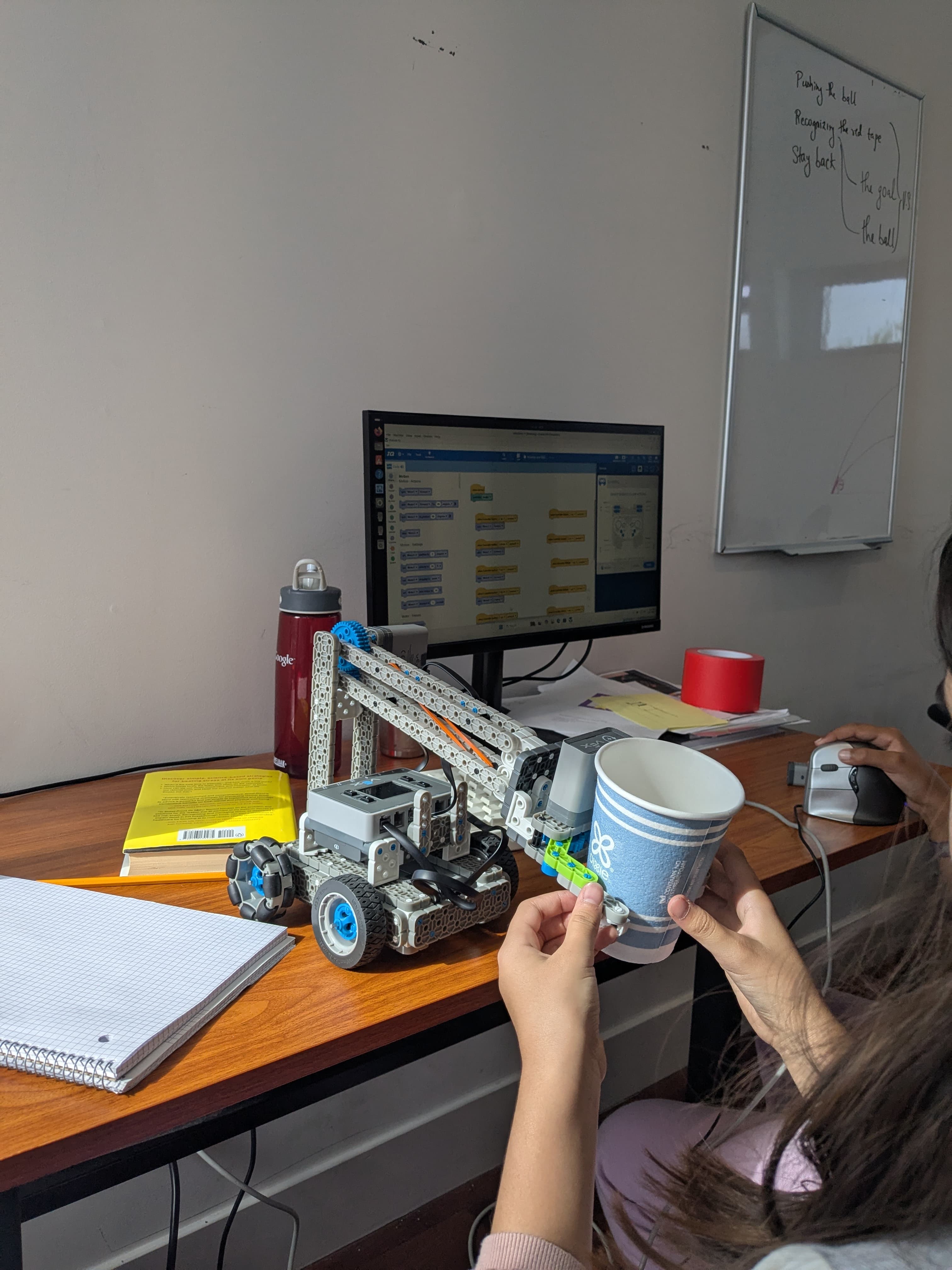
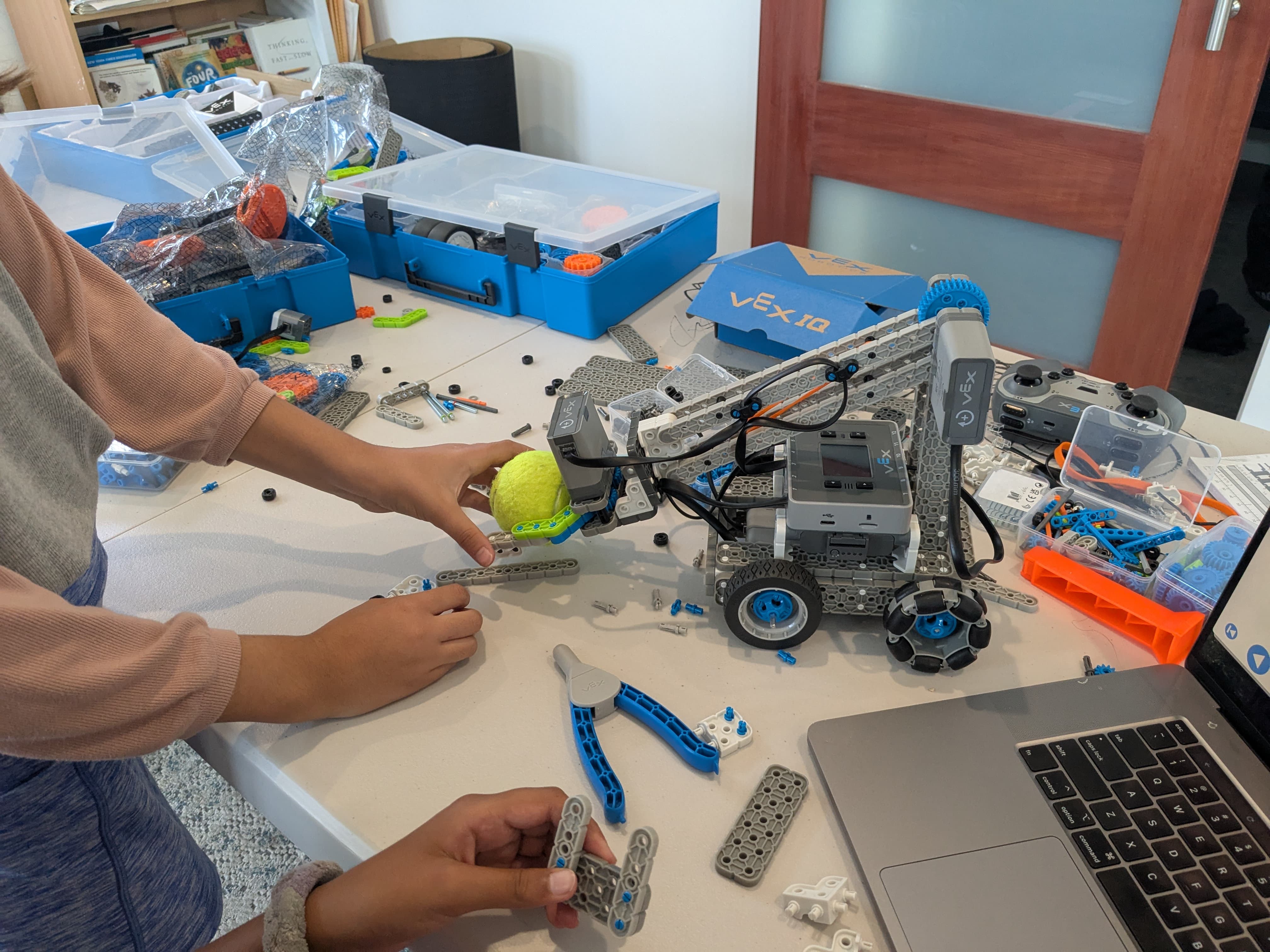
Clawbot for Beginners
The girls built an advanced clawbot from scratch.
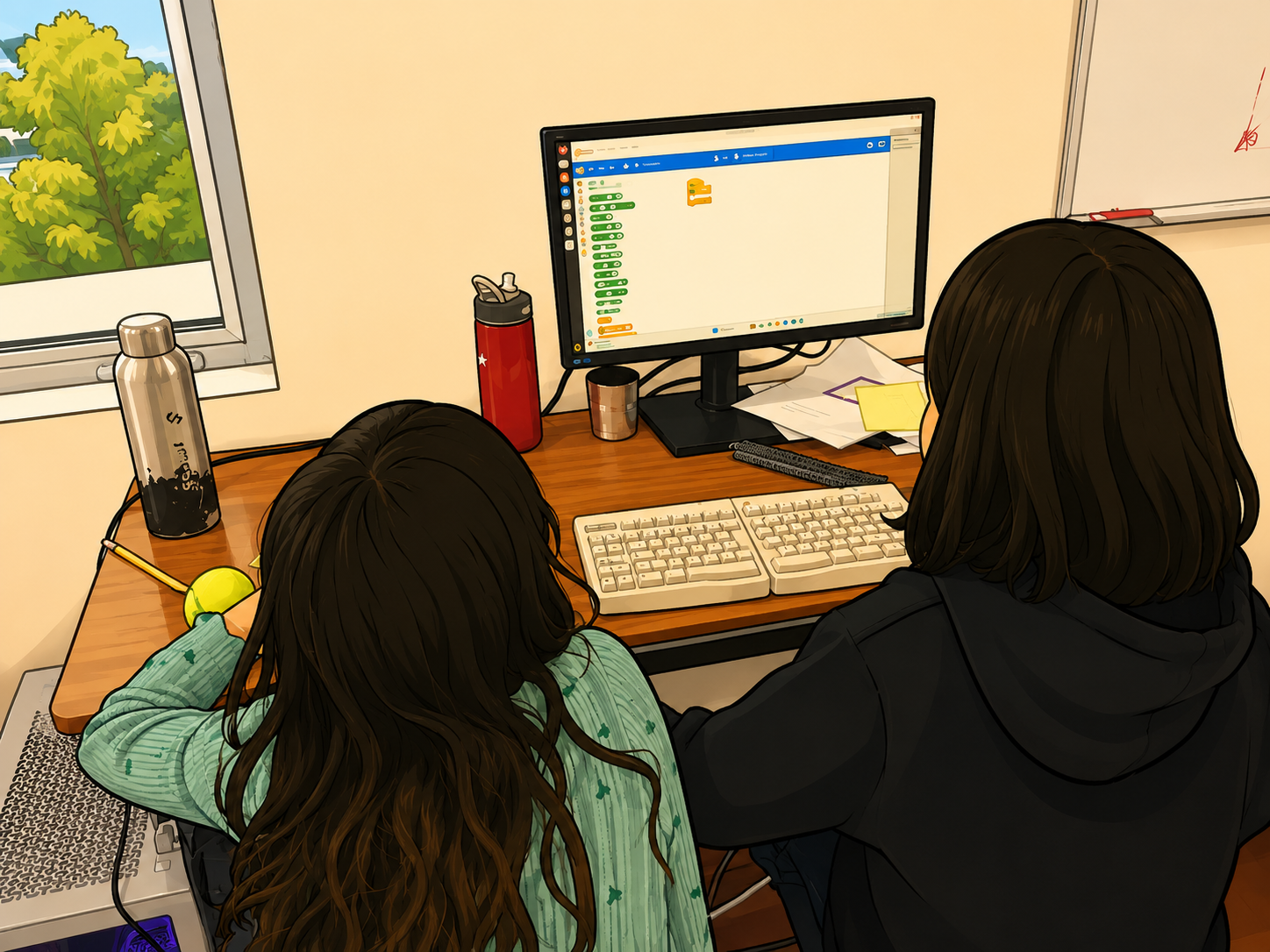
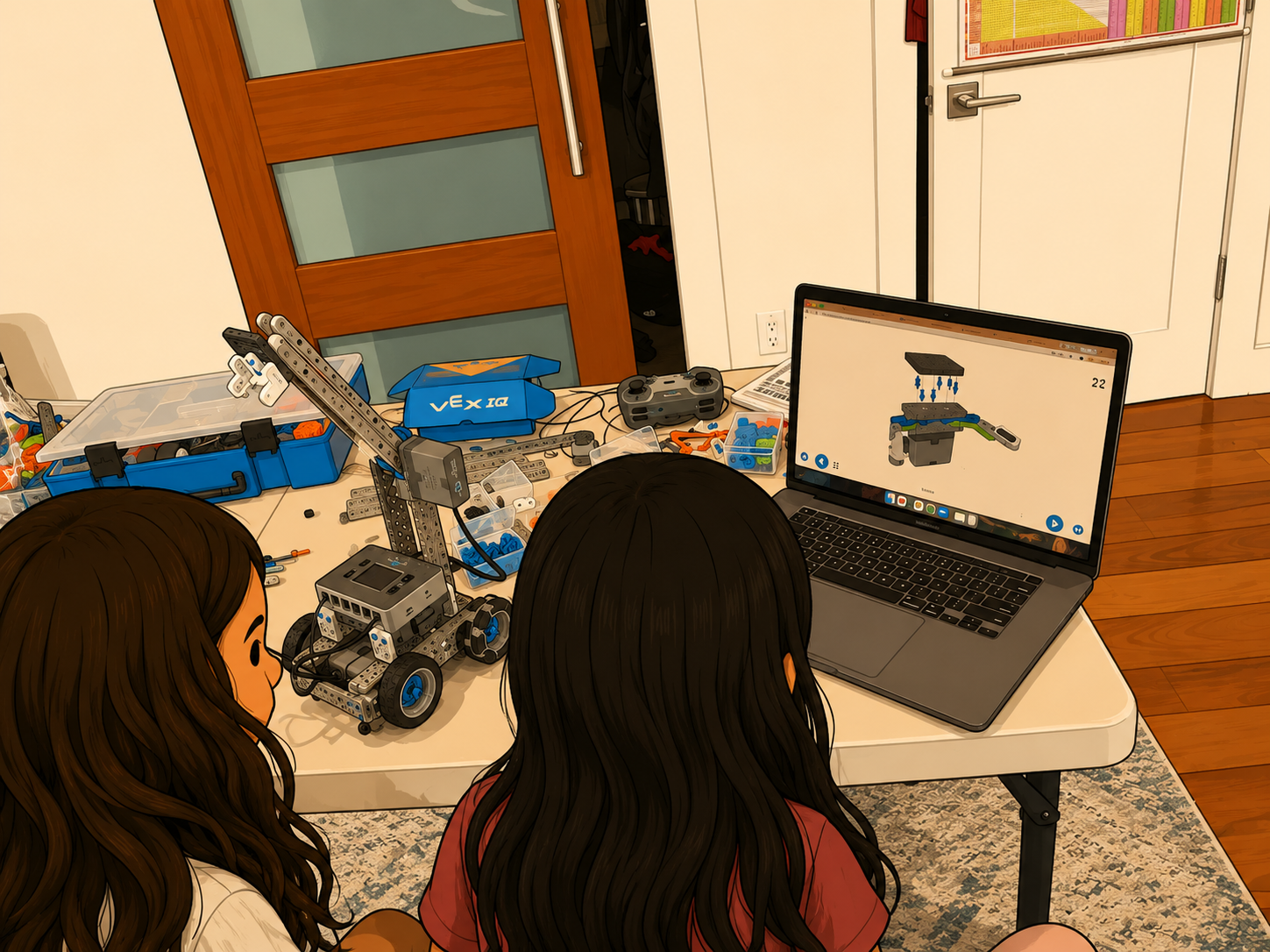
Programmable Bot
The girls programmed a color sensor for the clawbot.
Thank You
Thank you for being a part of this journey. Let’s continue to support and encourage our kids.